

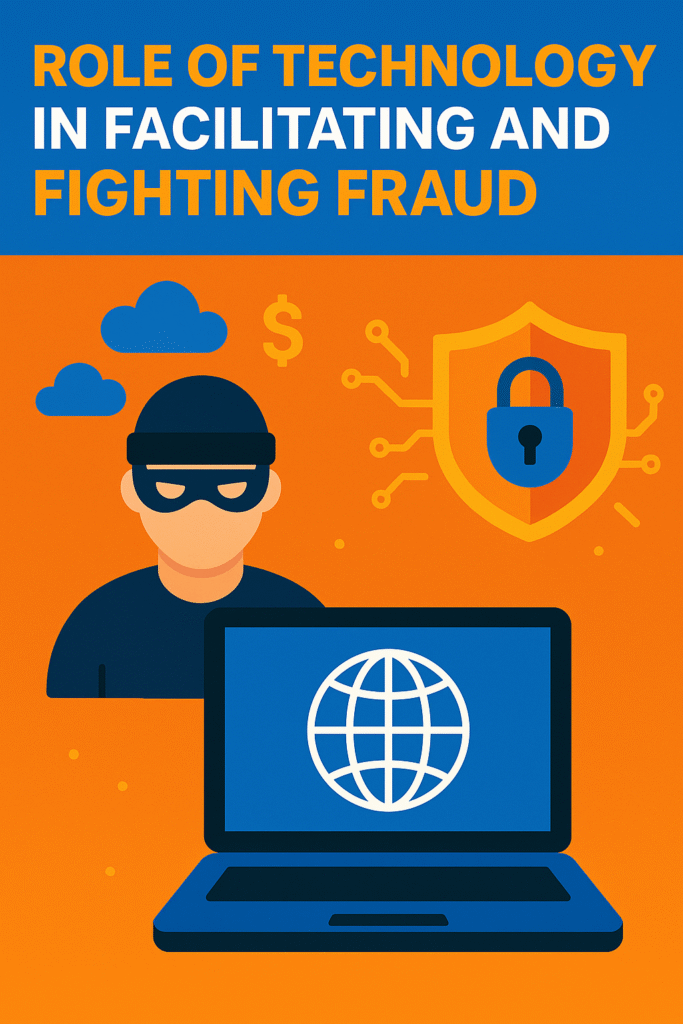
F – 14 | The Role of Technology in Facilitating and Fighting Fraud
Technology has revolutionized the way we live, work, and interact, but it has also transformed the world of fraud. From cybercriminals exploiting digital systems to advanced tools that detect fraud in real time, technology plays a dual role: it both enables and combats fraudulent activity.
As businesses and consumers embrace digital transactions, online banking, cloud computing, and artificial intelligence, the battlefield has shifted. In this blog, we’ll explore how technology facilitates fraud, how it fights back, and what organizations and individuals can do to stay ahead.
How Technology Facilitates Fraud
While technology brings incredible convenience and efficiency, it also creates new vulnerabilities. The very systems designed to make life easier can be manipulated by those with malicious intent.
- Phishing and Social Engineering
Email, SMS, and messaging apps provide fraudsters with direct lines of communication to victims. Phishing schemes have evolved from crude scam emails to sophisticated, targeted campaigns that mimic real companies.
- Spear phishing targets specific individuals, often within an organization.
- Smishing uses text messages with links to malicious websites.
- Voice phishing (vishing) uses AI-generated voices or spoofed numbers to impersonate banks or institutions.
These methods rely on trust and urgency, tricking people into revealing passwords, account numbers, or security codes.
- Data Breaches and Hacking
Cloud storage, centralized databases, and always-connected networks offer efficiency, but also risk. Cybercriminals use malware, ransomware, and brute-force attacks to steal massive quantities of personal and financial data.
High-profile breaches, such as those involving Equifax, Target, and Capital One, demonstrate the potential scale. Once data is compromised, it can be sold on the dark web or used to commit identity theft, insurance fraud, and account takeover.
- Synthetic Identities and Deepfakes
With access to data and AI tools, fraudsters can now create synthetic identities—a blend of real and fake personal details used to open fraudulent accounts. In parallel, deepfake technology allows criminals to mimic voices or faces in video calls, fooling biometric systems or tricking employees into authorizing fraudulent payments.
- Cryptocurrency and Untraceable Payments
Digital currencies have added new complexity. While not inherently fraudulent, cryptocurrencies like Bitcoin offer anonymity, making them attractive for scammers. Ponzi schemes, fake ICOs (Initial Coin Offerings), and ransomware payments are increasingly linked to crypto transactions.
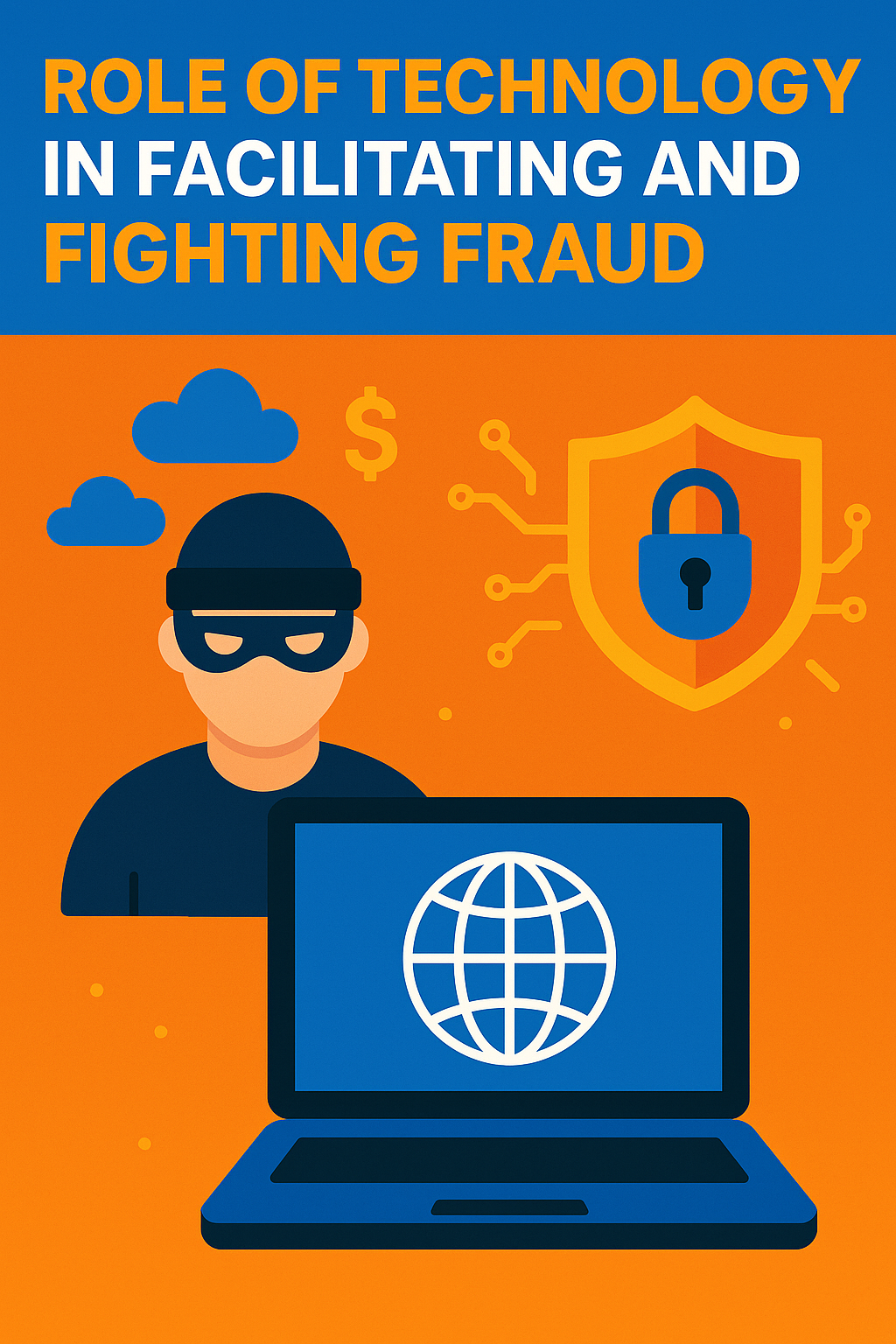
How Technology Fights Fraud
Fortunately, the same technological evolution that enables fraud also equips us with powerful tools to prevent, detect, and respond to it.
- Artificial Intelligence & Machine Learning
AI and machine learning (ML) are at the forefront of modern fraud prevention.
- Behavioral analysis: AI systems monitor user behavior—how you type, swipe, or log in—and detect deviations that may indicate fraud.
- Real-time fraud detection: ML algorithms flag suspicious transactions instantly, reducing losses and response times.
- Pattern recognition: AI learns from past fraud cases to identify trends, clusters, and new techniques faster than human analysts could.
Financial institutions, e-commerce platforms, and insurance companies are now embedding these technologies directly into their risk management systems.
- Blockchain and Transparency
Blockchain technology offers immutable and transparent recordkeeping. In a fraud-fighting context, blockchain can:
- Verify supply chains, preventing counterfeit goods or manipulated inventories.
- Secure digital identities, reducing identity theft through decentralized authentication.
- Audit financial transactions with a tamper-proof trail.
While still evolving, blockchain presents a promising shift toward fraud-resilient systems, especially in sectors like finance, logistics, and healthcare.
- Biometric Authentication
Biometric security—such as fingerprint scanning, facial recognition, and voice authentication—is increasingly common in consumer devices and secure systems.
Unlike passwords, biometrics are harder to replicate or steal. When paired with multi-factor authentication (MFA), they create robust barriers against unauthorized access.
- Digital Forensics and Cybercrime Units
Law enforcement and private investigators now use digital forensics tools to trace online activity, recover deleted files, decrypt communications, and map networks of criminal activity.
Interpol, the FBI, and other global agencies have dedicated cybercrime divisions working with private cybersecurity firms to track fraudsters across borders. Technology enables not only detection, but also prosecution—a critical piece in deterrence.
The Growing Importance of Cyber Hygiene
The tools are powerful, but human behavior remains a critical factor. Social engineering, weak passwords, outdated systems, and poor cyber hygiene continue to make organizations and individuals vulnerable.
Best Practices to Reduce Tech-Facilitated Fraud:
- Implement multi-factor authentication (MFA) for all accounts.
- Use endpoint protection software and keep systems patched and up to date.
- Educate employees and customers on phishing, social engineering, and fraud trends.
- Monitor networks in real time and automate alerts for suspicious behavior.
- Limit access to sensitive data on a need-to-know basis.
- Back up data regularly and use encrypted storage.
The Crucial Role of Cybersecurity in Combating Fraud
While advanced technologies like AI and blockchain are reshaping fraud prevention, cybersecurity remains the foundational layer in protecting systems, data, and users from fraudulent attacks. Without robust cybersecurity, even the most sophisticated fraud detection tools can be rendered ineffective.
Cybersecurity practices help:
- Prevent unauthorized access to financial and personal information.
- Detect threats early, such as malware, ransomware, or phishing attempts.
- Protect the integrity of digital transactions, especially in online banking, e-commerce, and healthcare.
- Ensure data privacy, making it harder for fraudsters to steal and misuse identities.
Cybersecurity is no longer just the IT department’s concern, it’s a business-critical function. From firewalls and encryption to employee training and threat monitoring, organizations must adopt a layered defense strategy. In the fight against fraud, strong cybersecurity isn’t optional, it’s essential.
Balancing Innovation with Risk
As businesses race to adopt AI, automate processes, and digitize customer experiences, it’s essential they consider fraud resilience as part of innovation. Convenience should never come at the cost of control.
Key questions every organization should ask:
- Are we assessing the security risks of new technology?
- Do we understand how our data could be exploited?
- Are our fraud prevention systems evolving with the threat landscape?
Conclusion
Technology is a double-edged sword in the world of fraud. On one side, it opens doors for criminals to exploit speed, scale, and anonymity. On the other, it arms businesses and governments with the tools to fight back, smarter, faster, and more precisely than ever before.
In this ongoing cat-and-mouse game, vigilance, innovation, and collaboration are key. Technology alone won’t stop fraud, but when paired with education, awareness, and ethical governance, it becomes our strongest defense.
As fraud becomes more digital, so must our response. The future of fraud prevention isn’t just about stronger locks; it’s about smarter systems and more informed people on both sides of the screen.

Dieudonne (Neetje) van der Veen is a financial and management business advisor. His work and experience are mainly in the field of financial management and structuring of companies in distress and Governance on Planning & Control cycles.
Mr. van der Veen has a master’s degree in business economics (Erasmus University Rotterdam), is a Registered Accountant (Royal Dutch Professional Organization of Accountants), CFE (Certified Fraud Examiner) and CICA (Certified Internal Control Auditor).
Mr. van der Veen writes articles about Governance and Fraud, and actively contributes to the ACFE-DCC community for knowledge-sharing.
